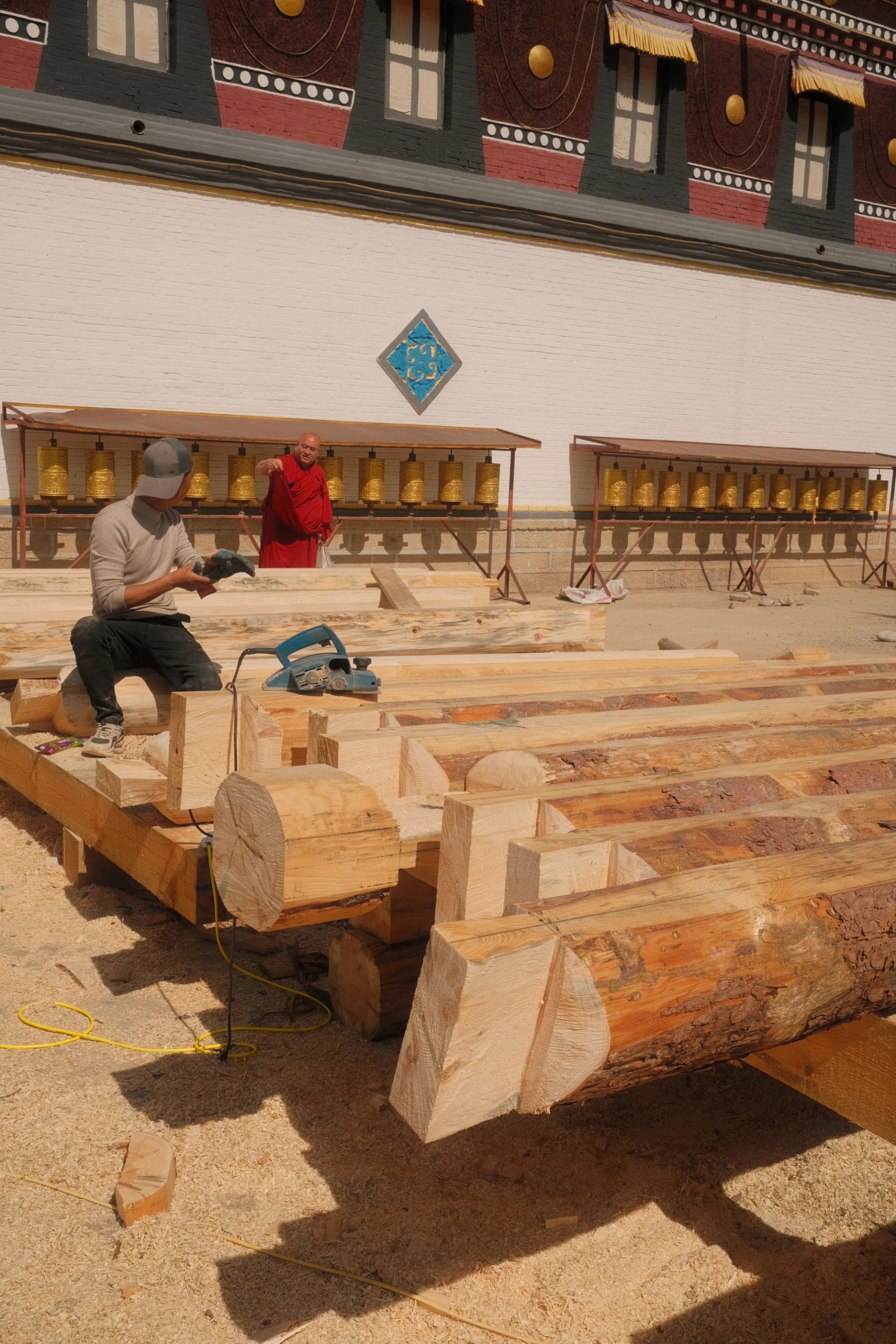
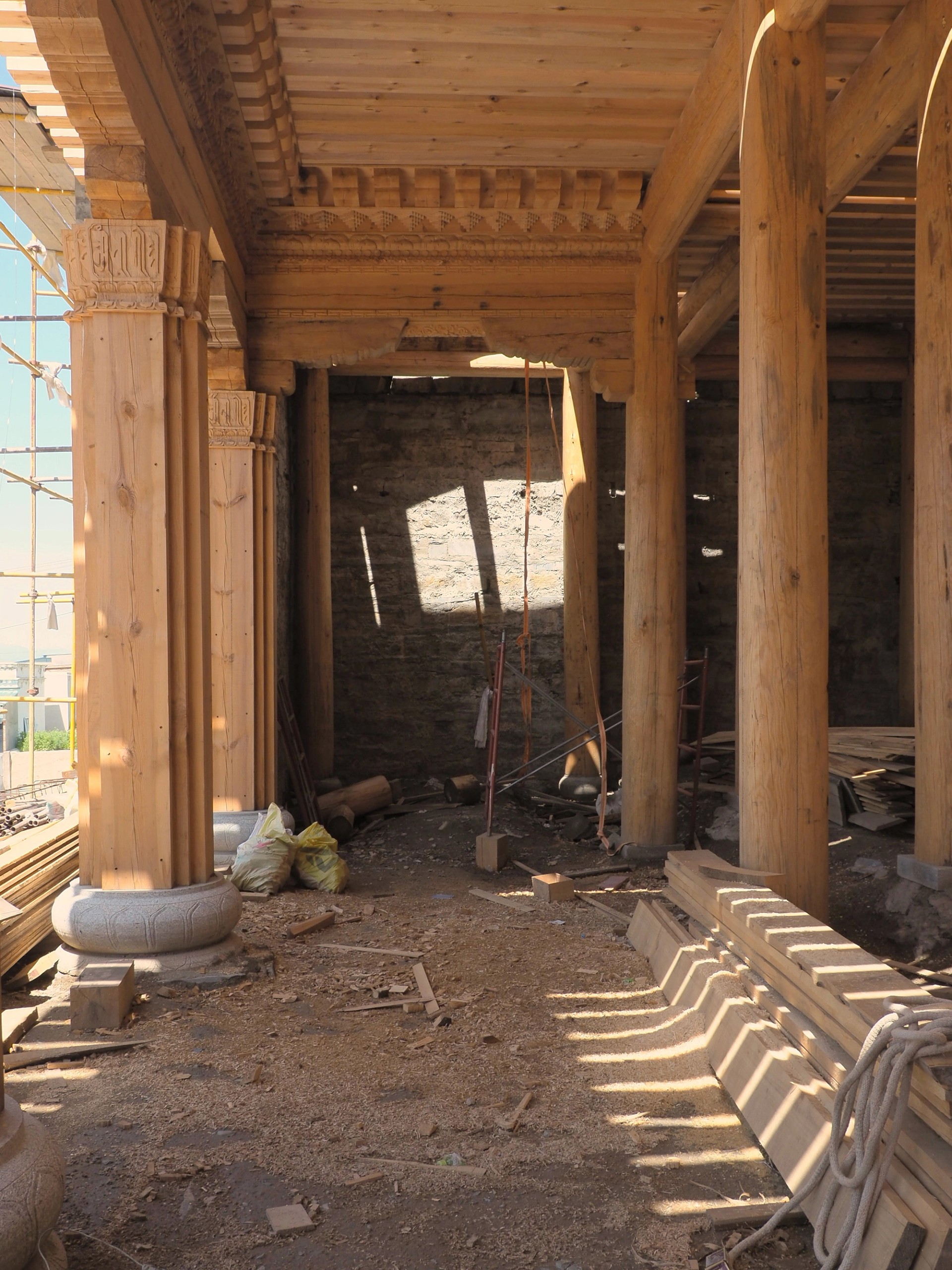
Entrance and Corridor Detail Study

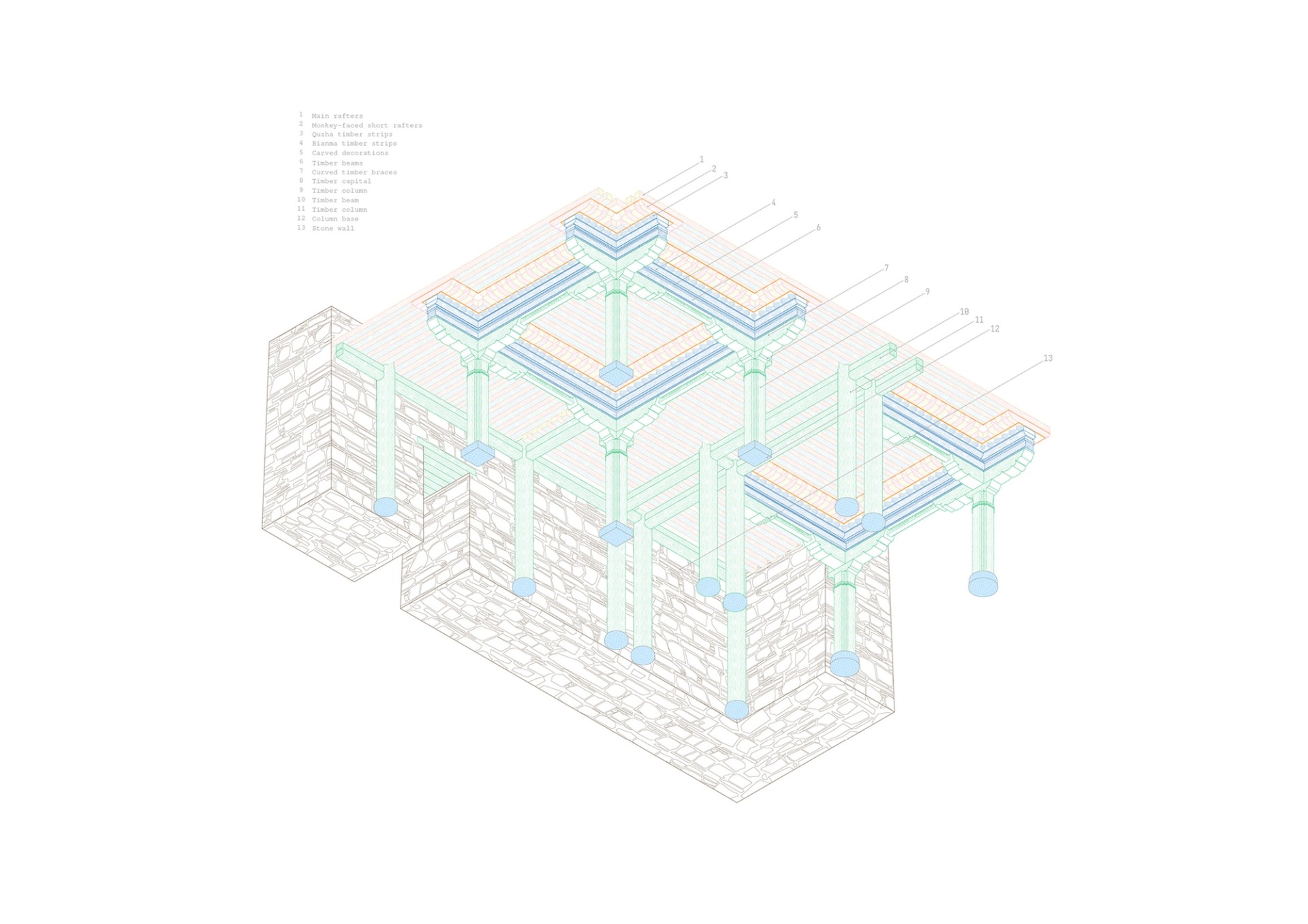
Within the stone wall-timber beam frame structural system, stone wall serves as the core component of the building enclosure, tapering upward with a wider base and narrower top.
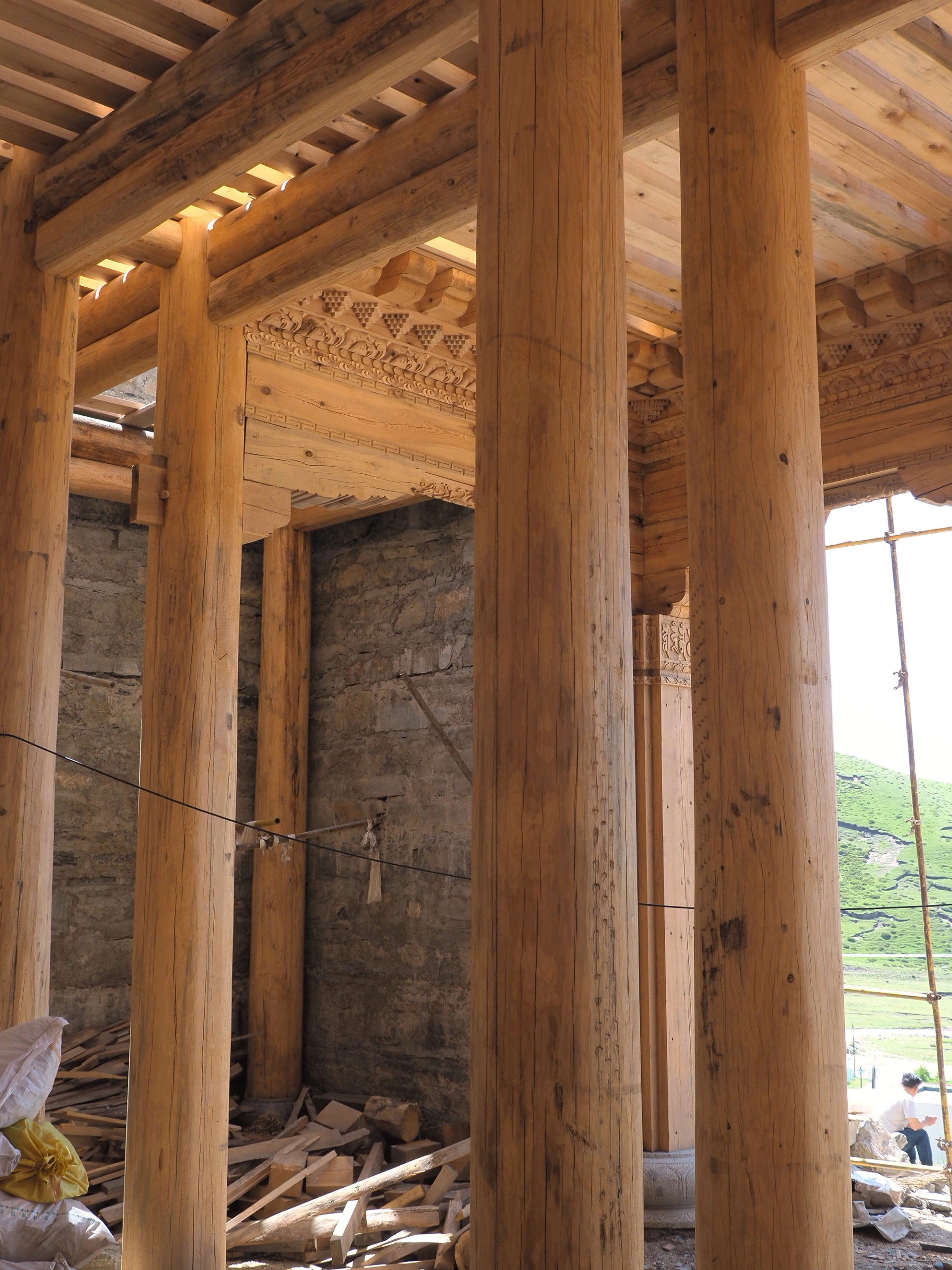
The stone walls and timber beam frames are directly connected via a "raw connection" without any additional transitional structural members.
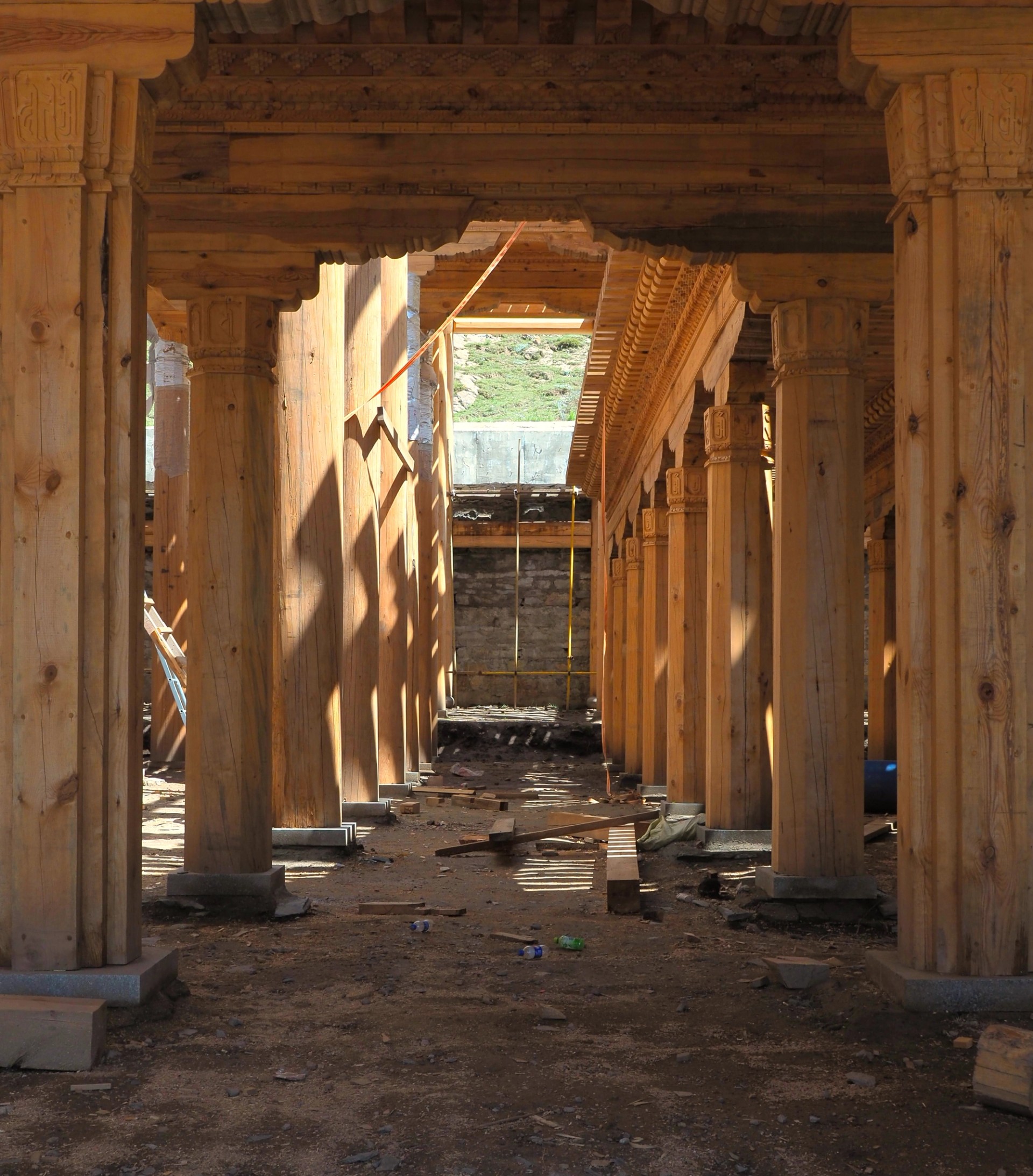
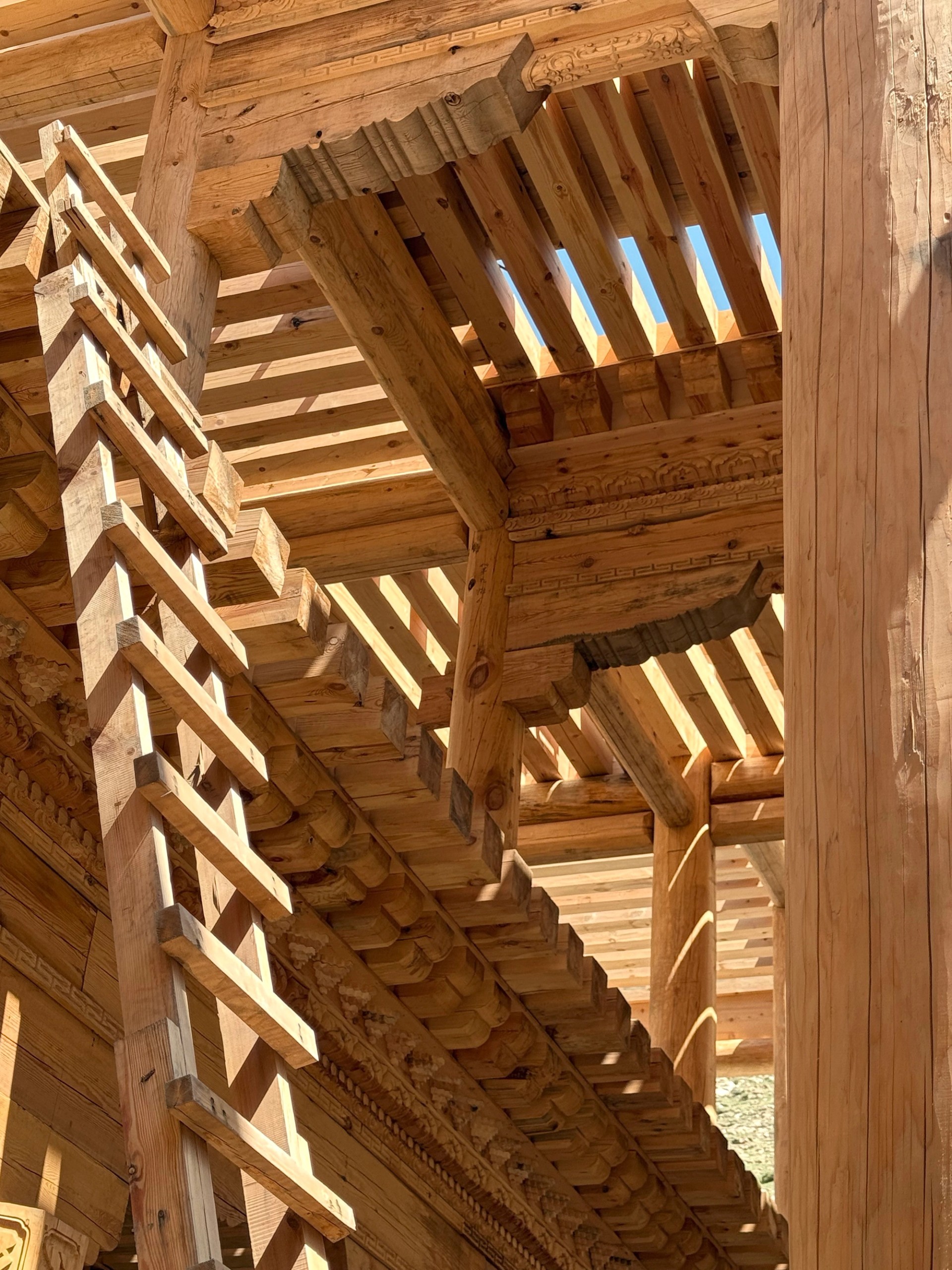

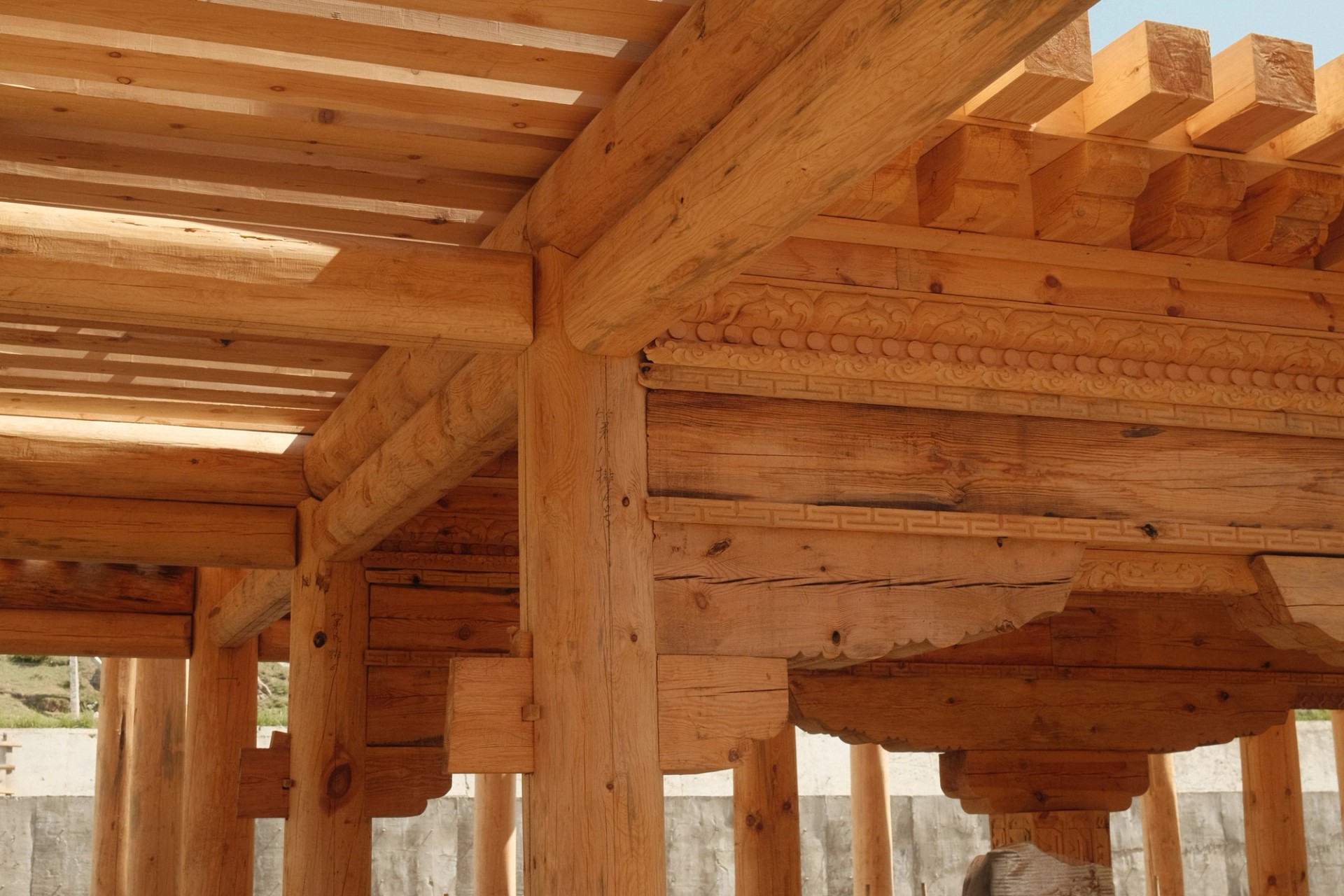
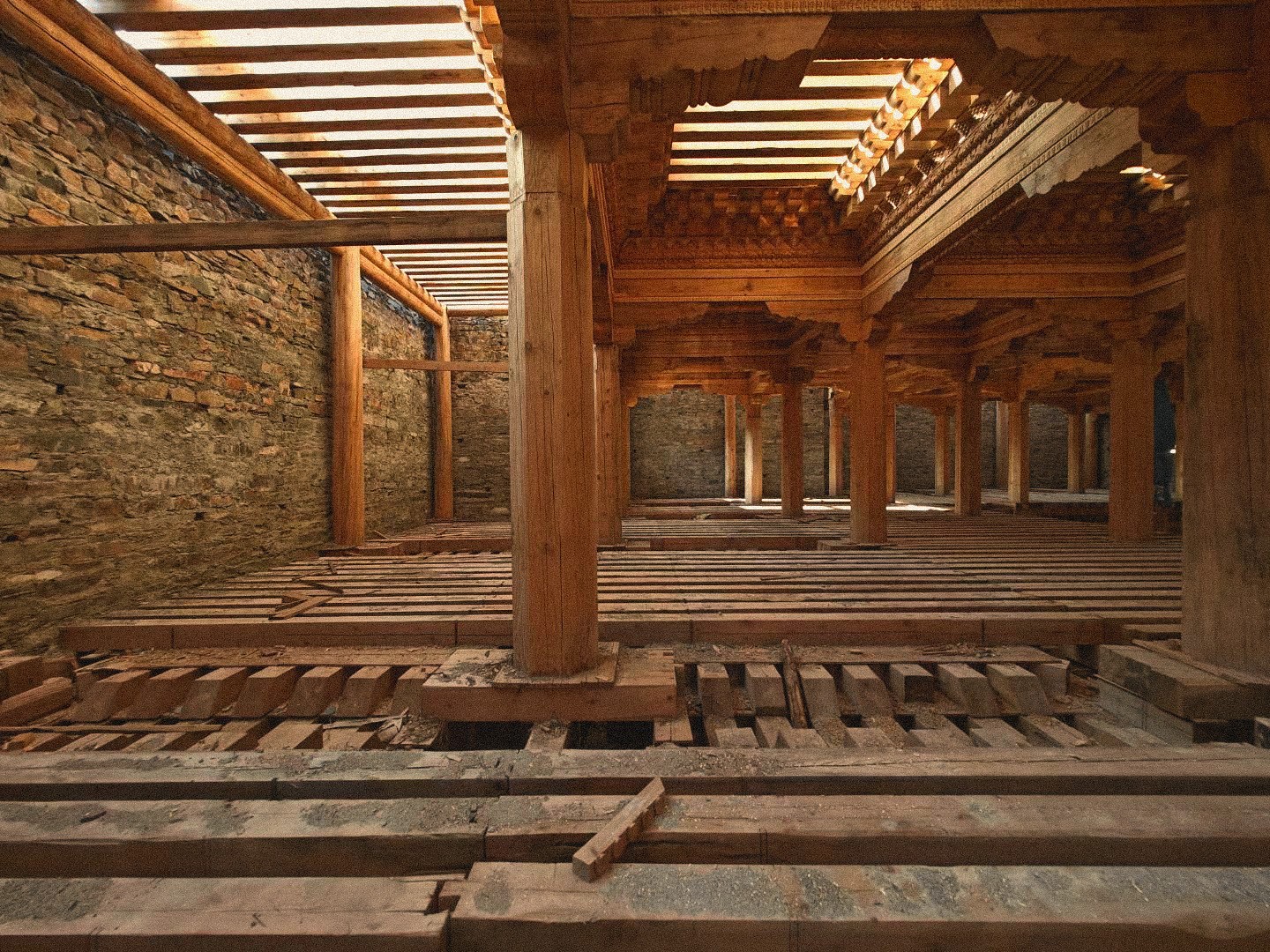
The stone walls are built with locally quarried stone. Wall thickness varies with the building height, generally ranging from 1200 mm to 1600 mm. Both the inner and outer wall surfaces have inward batter at the upper section, with a setback of about 20–25 mm on the inner face and 25–30 mm on the outer face.
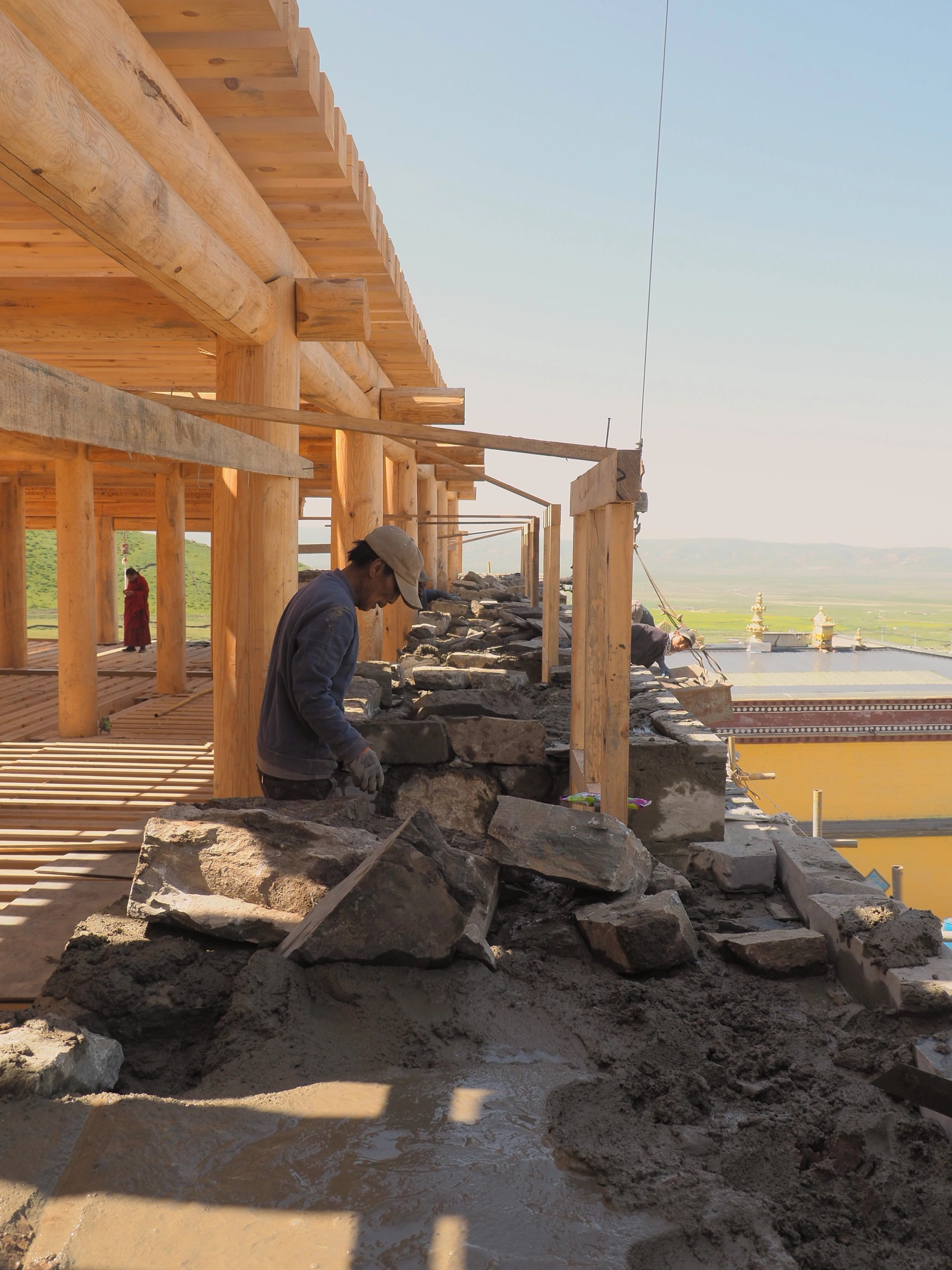
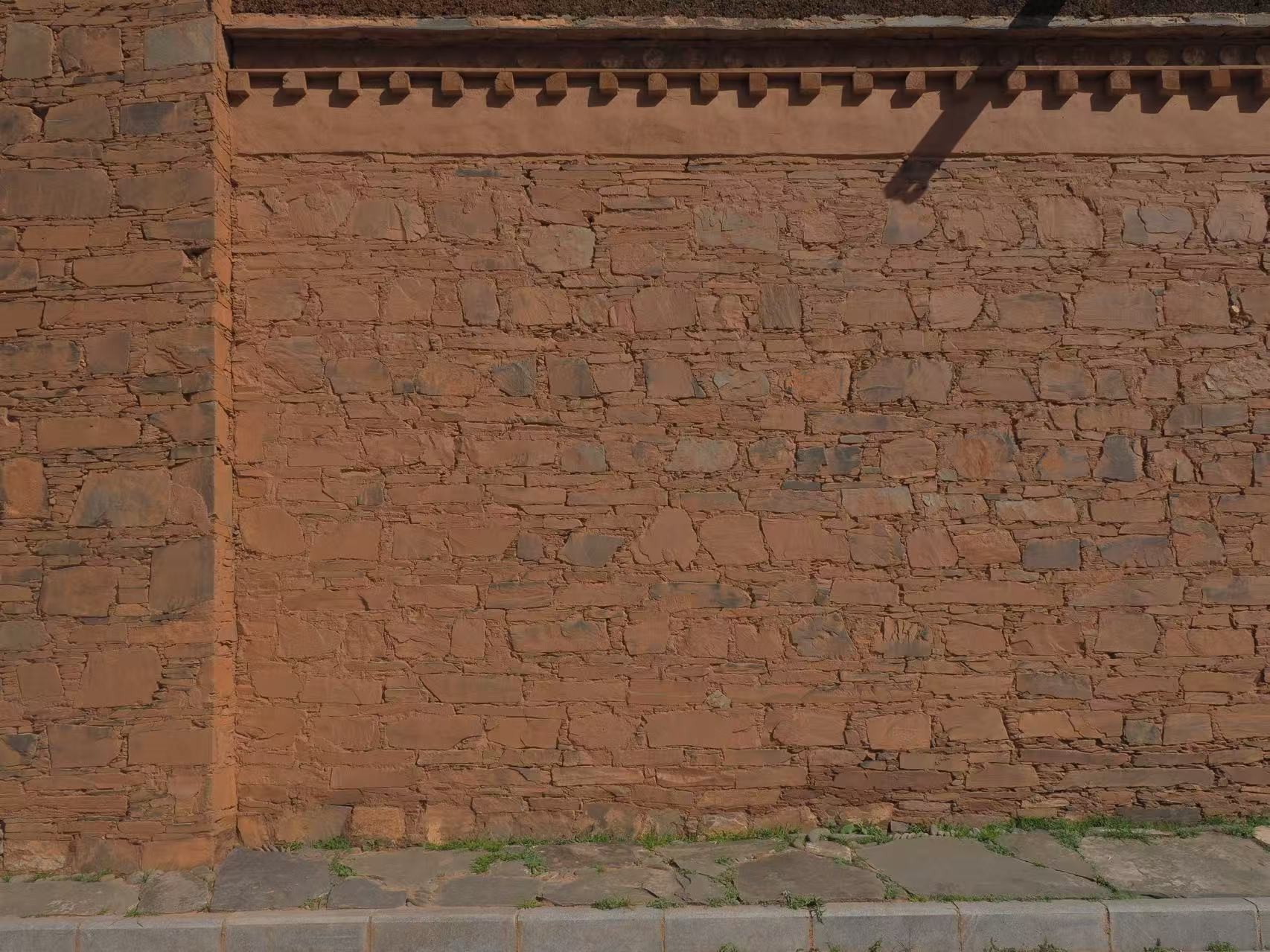
Wall construction follows local traditional techniques. From bottom to top, the wall consists of repeating layers: 200 mm thick large stones, 30 mm thin flagstones, 140 mm medium stones, and another layer of 30 mm thin flagstones, stacked cyclically to form the complete wall.
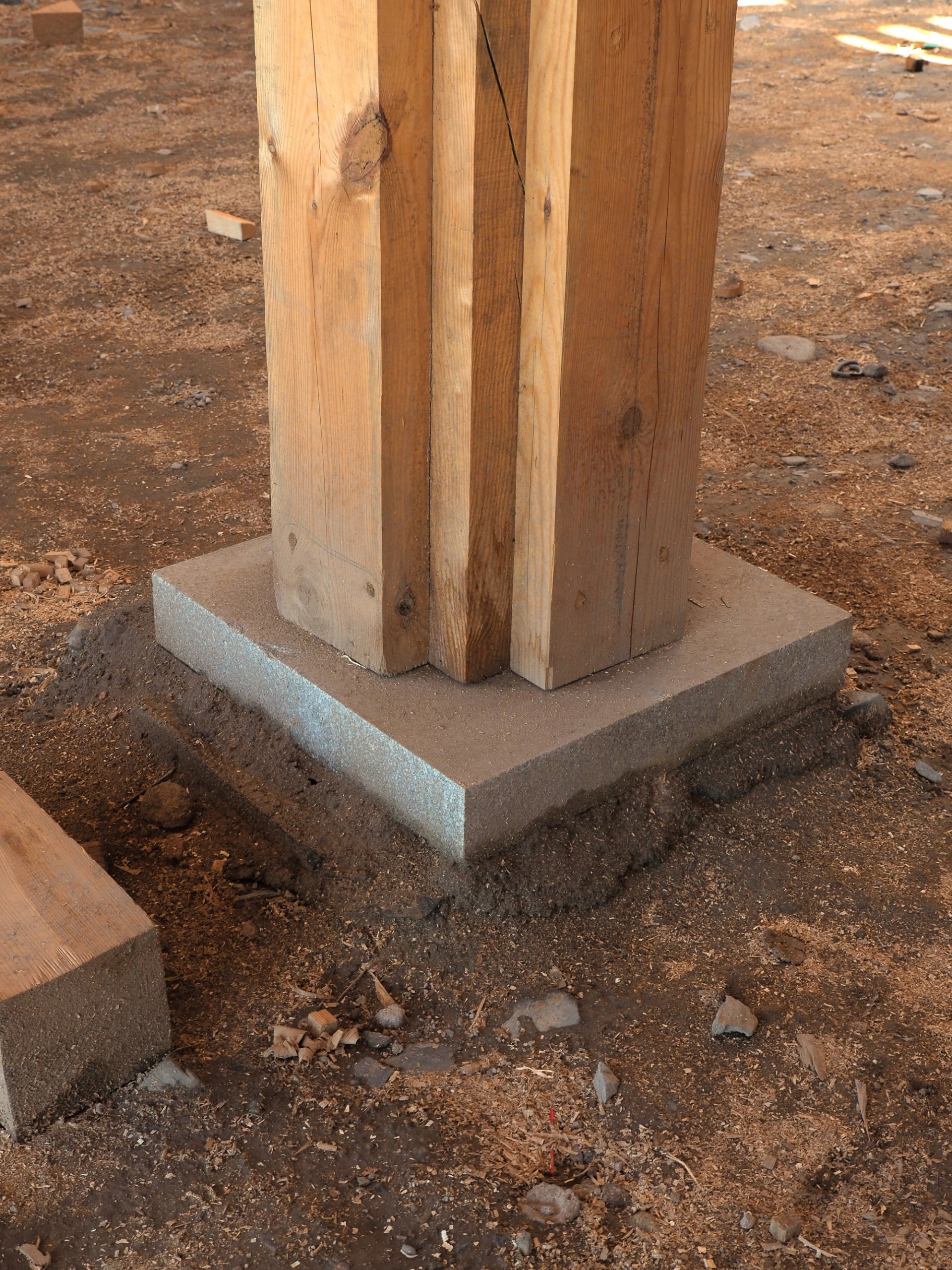
The traditional connection between the timber column base and the stone column foundation does not require any work. Nowadays, concealed dowel holes are drilled in the center of the column base and foundation, with a depth of generally 80mm and a length and width of around 60mm. Then, wooden dowels are inserted into these holes. The column foundation should be buried at a depth of no less than 200mm underground to ensure the vertical stability of the column.