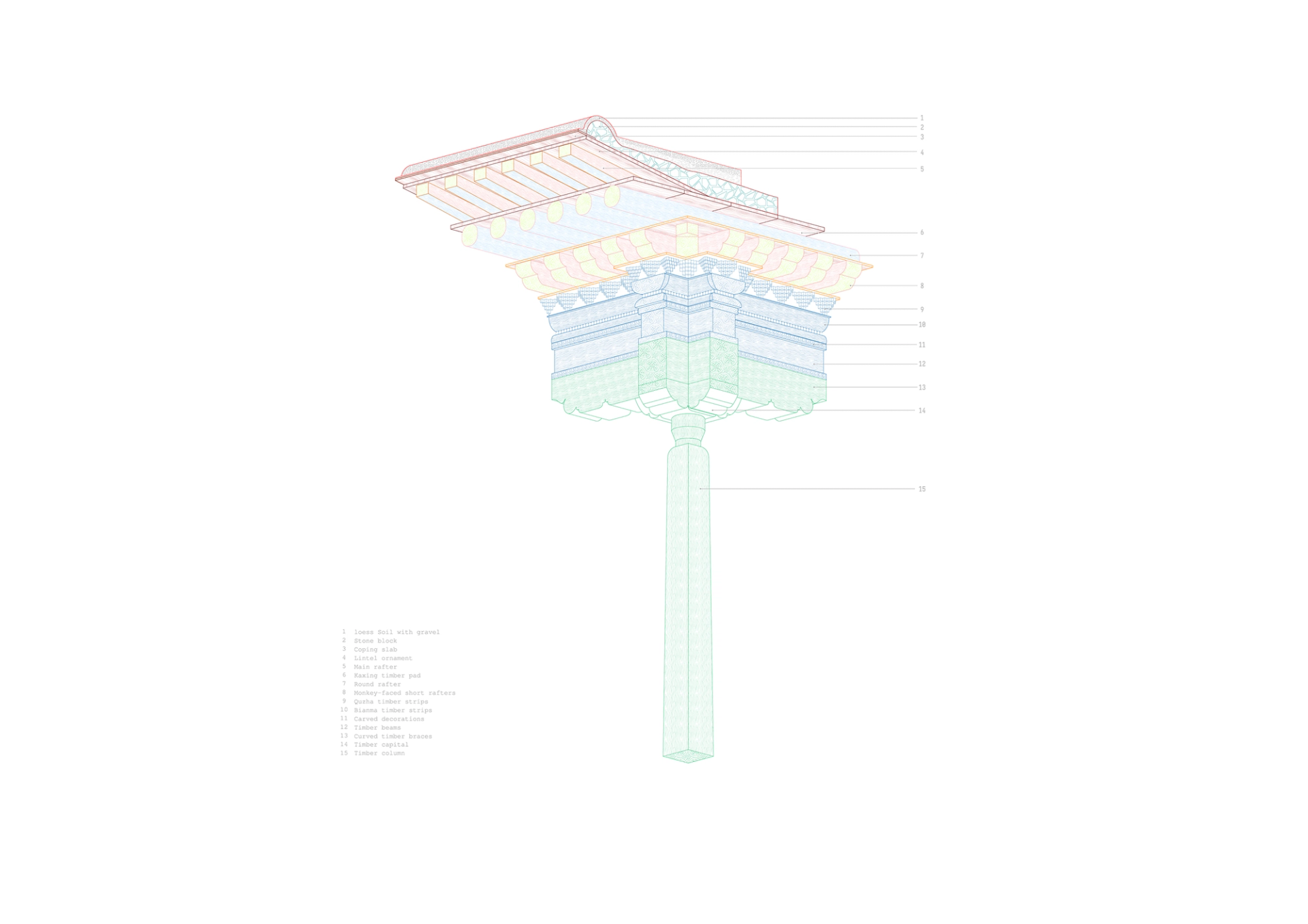
Roof Structure Detail Study

Traditional flat Tibetan buildings rely on timber column-beam frames to hold up floors and roofs. Workers ram stones and loess over the frame to create a solid finished surface.
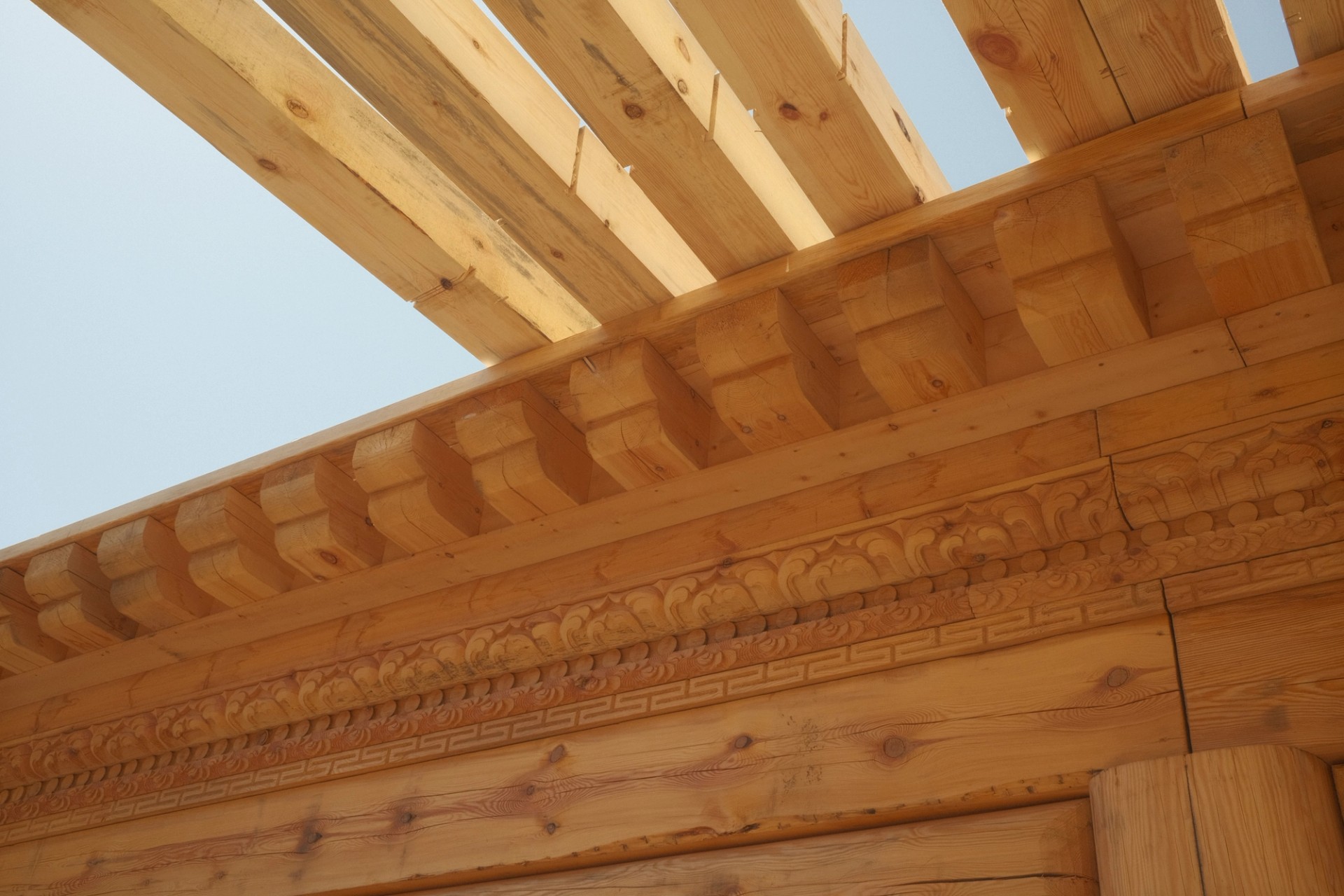
For traditional roof construction, wooden planks or strips are laid over rafters first, then large stones and crushed small stones are placed in order.
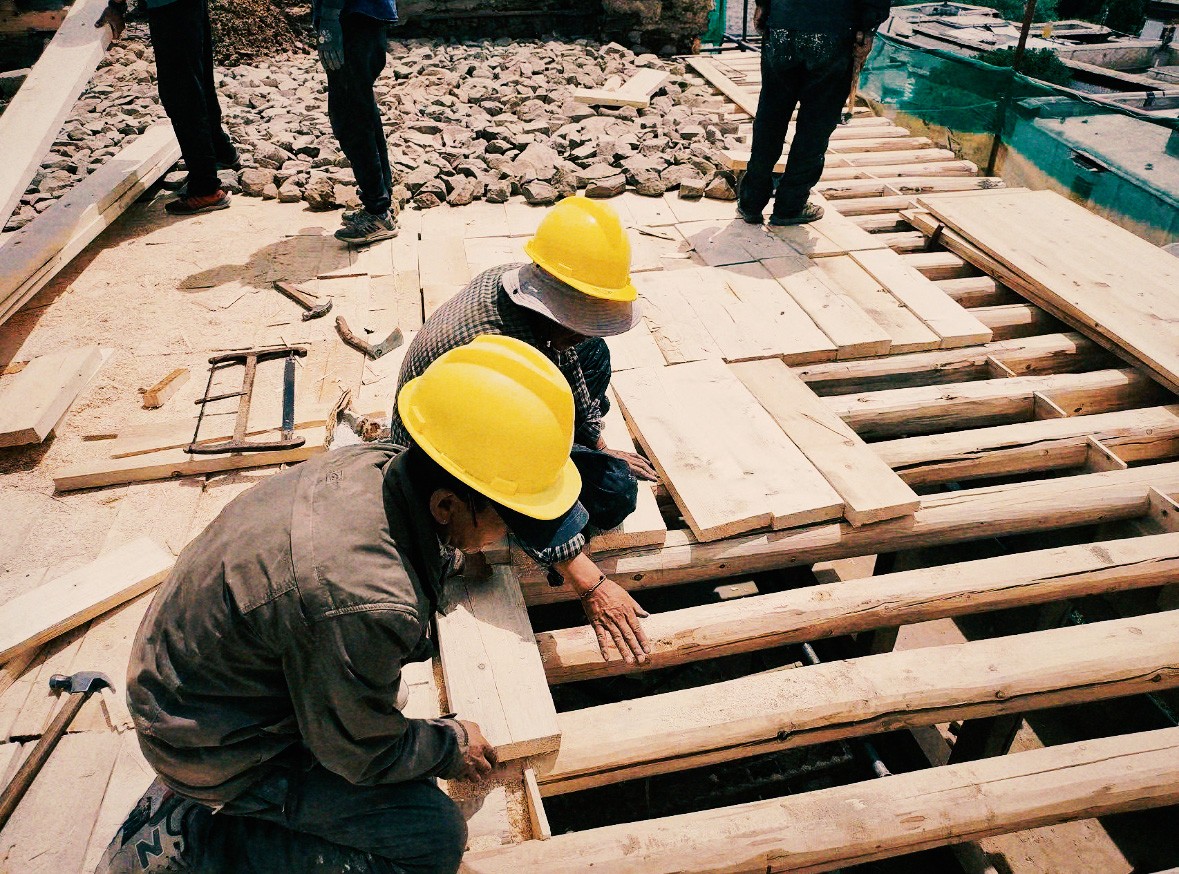
Nowadays, plastic sheets are added as a damp-proof layer, and the entire surface is rammed with loess soil to finish the roof assembly.

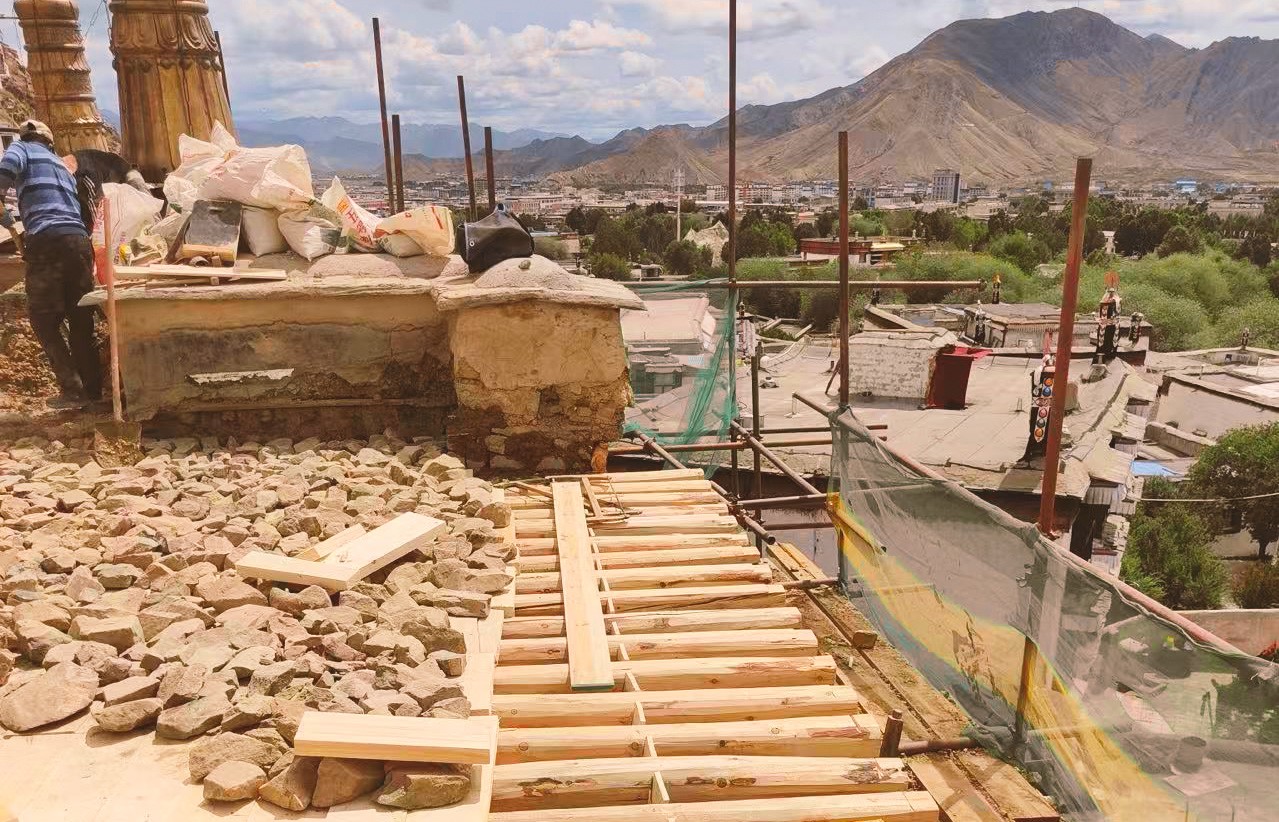
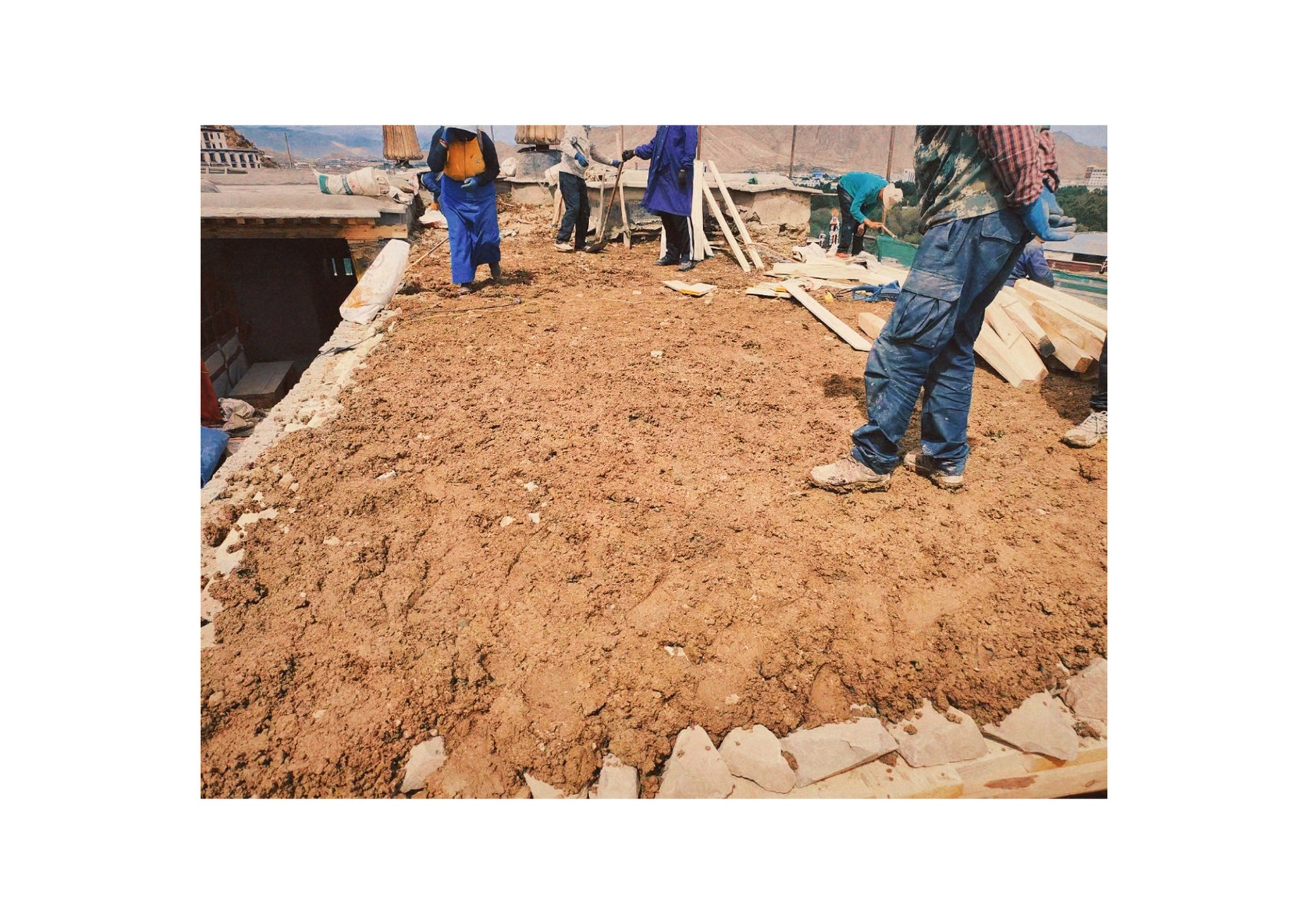
Eaves are moderately raised and the roof is built with a gentle slope to enable rainwater drainage.
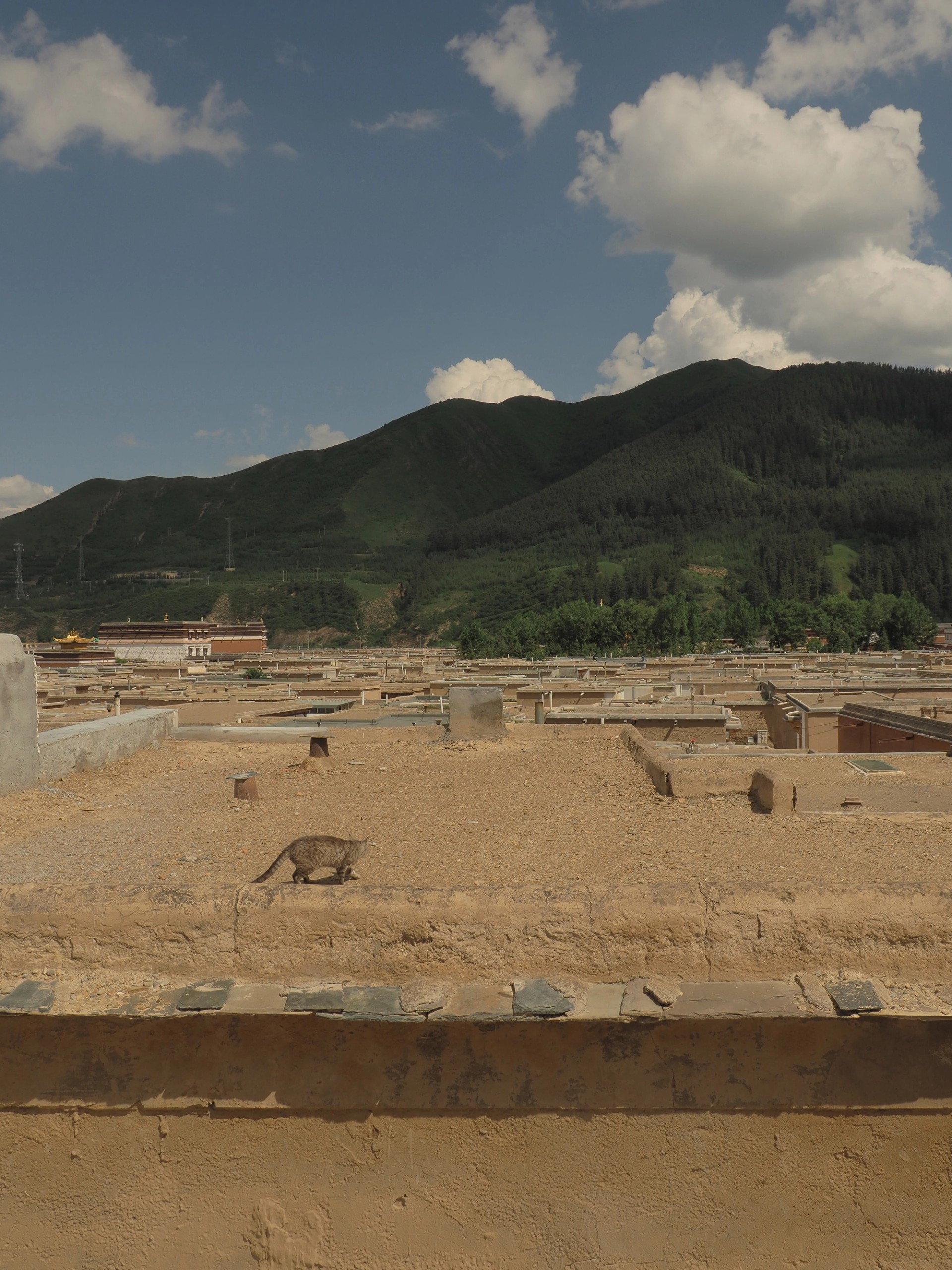
This structural detail drawing is drawn based on archival documents and on-site photos, integrating the construction of Tibetan flat roofs and multi-layer column-beam timber frame. Further research on this roof joint detail is still in progress.