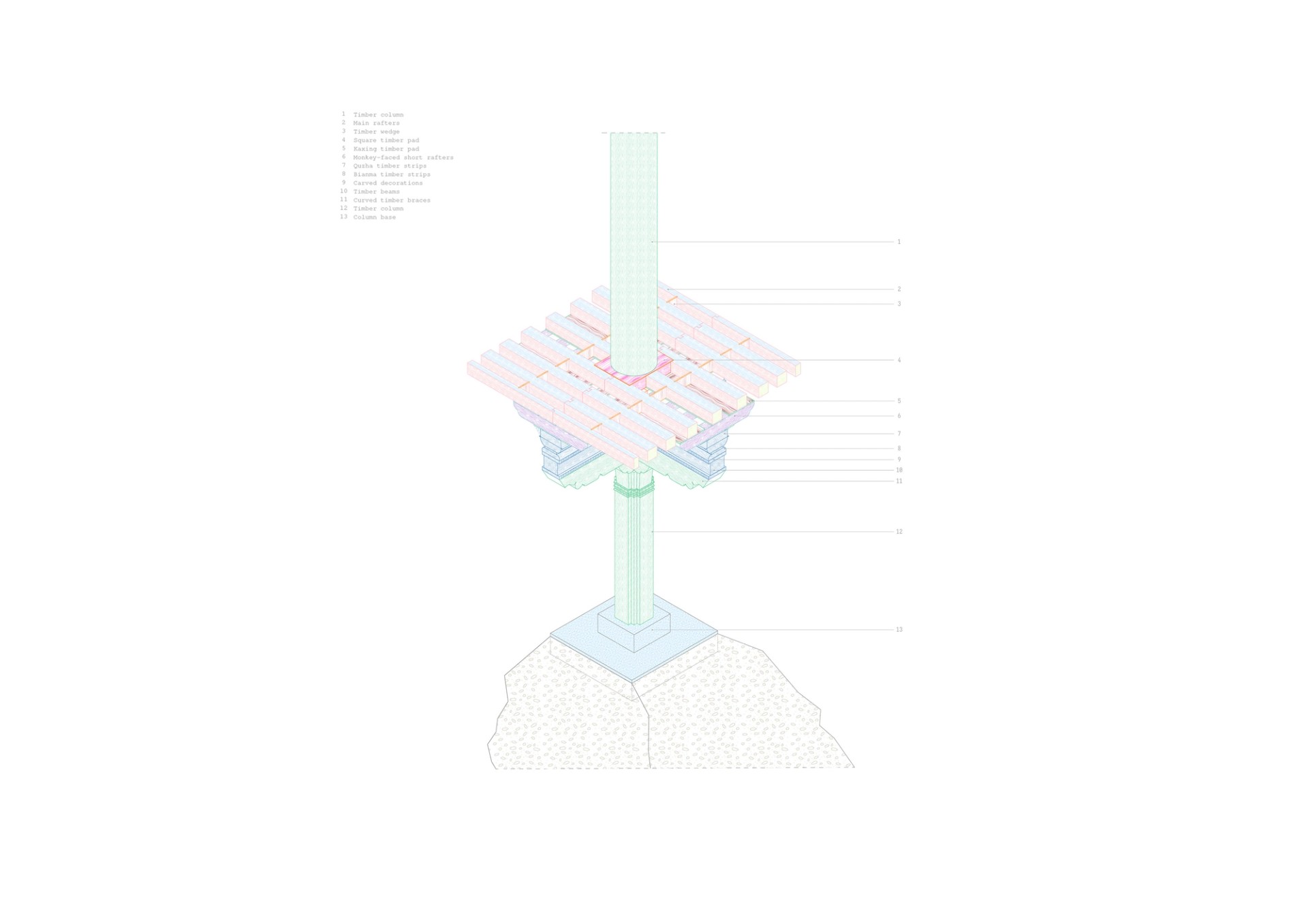
Timber Floor Junction Detail Study

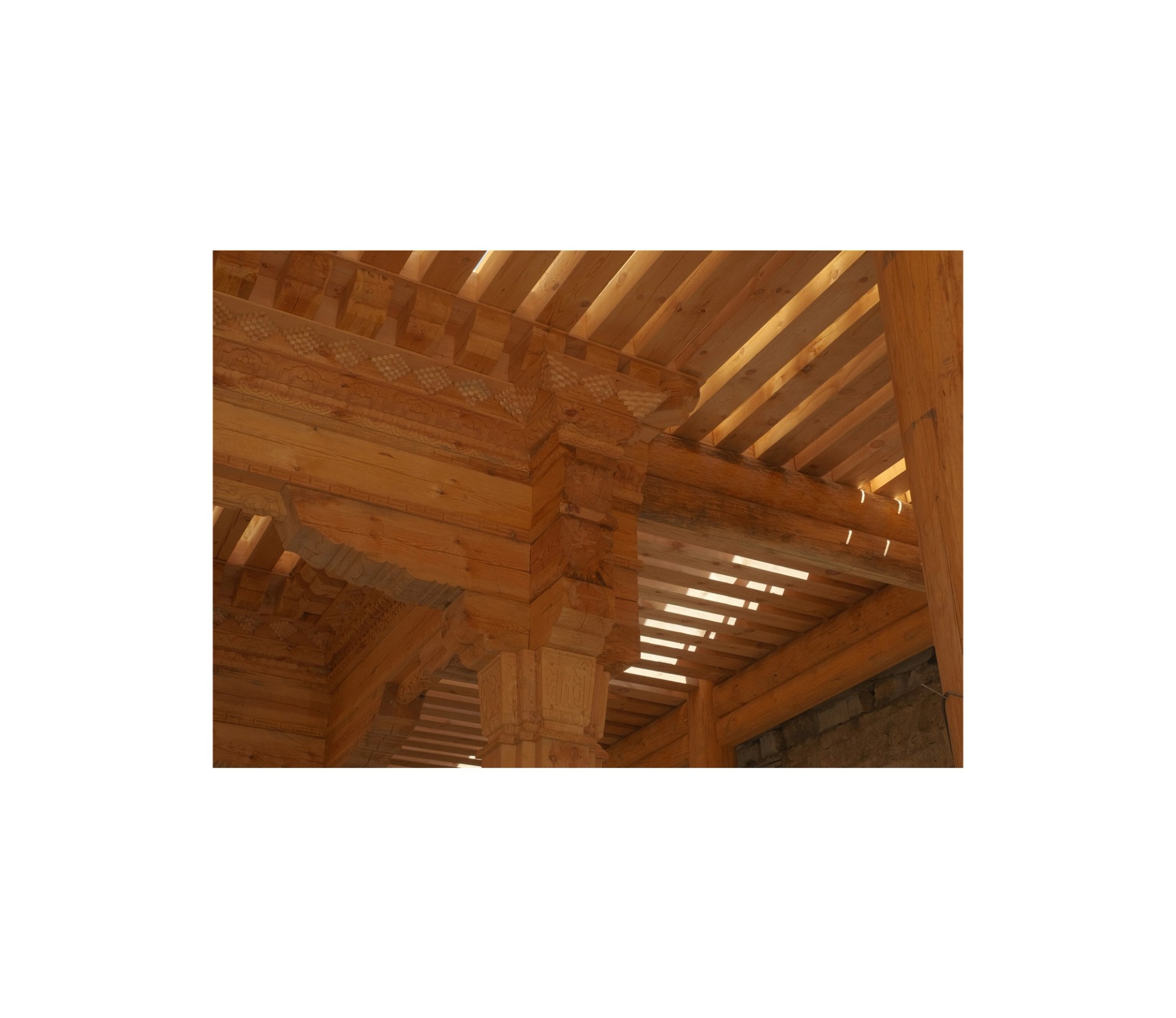
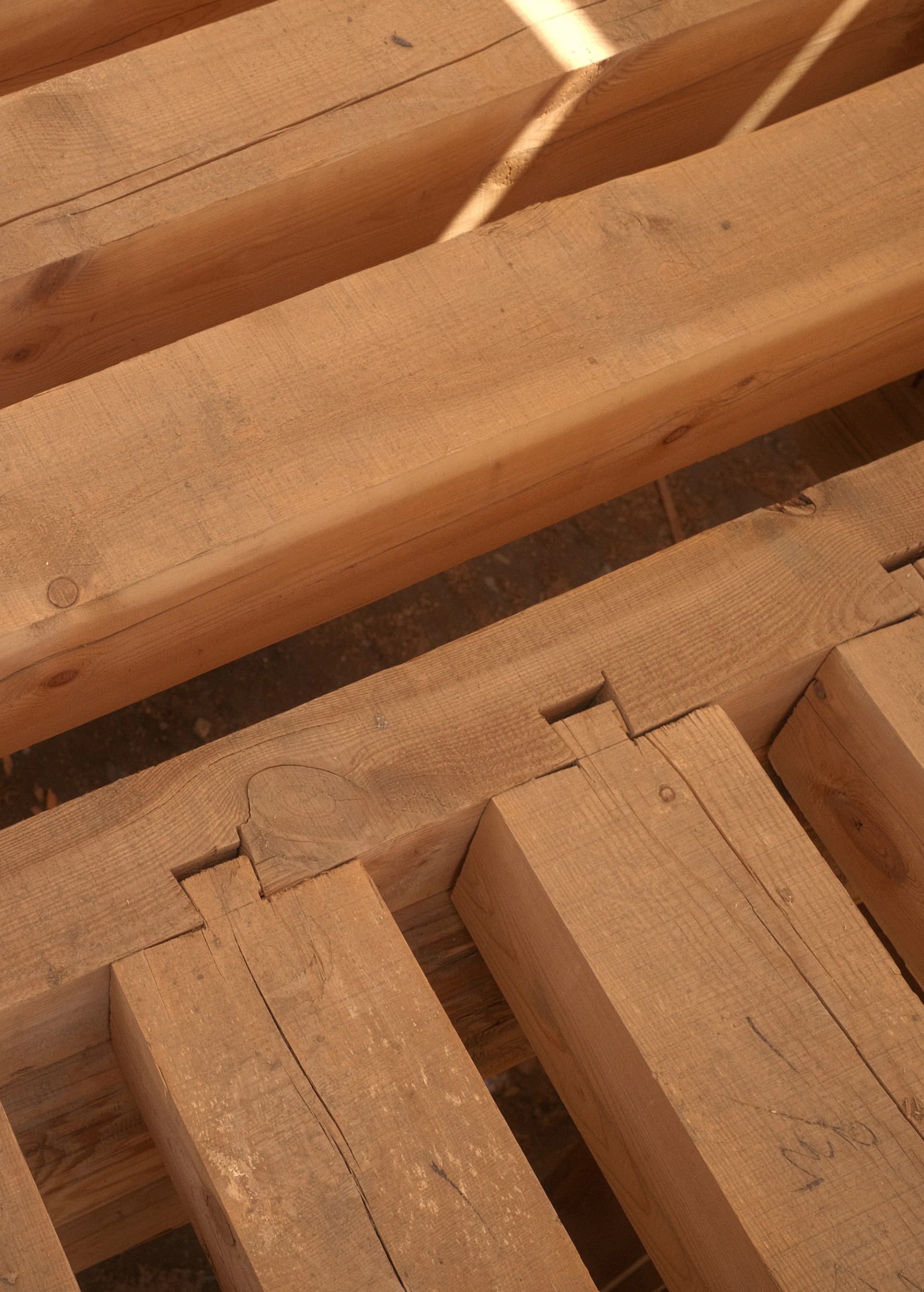
This node shows how the wooden structures of the first and second floors in a Tibetan-style temple are vertically connected. The top of the lower wooden columns is equipped with long and short support beams to support the main beam. The main beam and the secondary beams cross over each other, creating a grid pattern. The column grid aligns vertically and horizontally, ensuring axial force transmission.
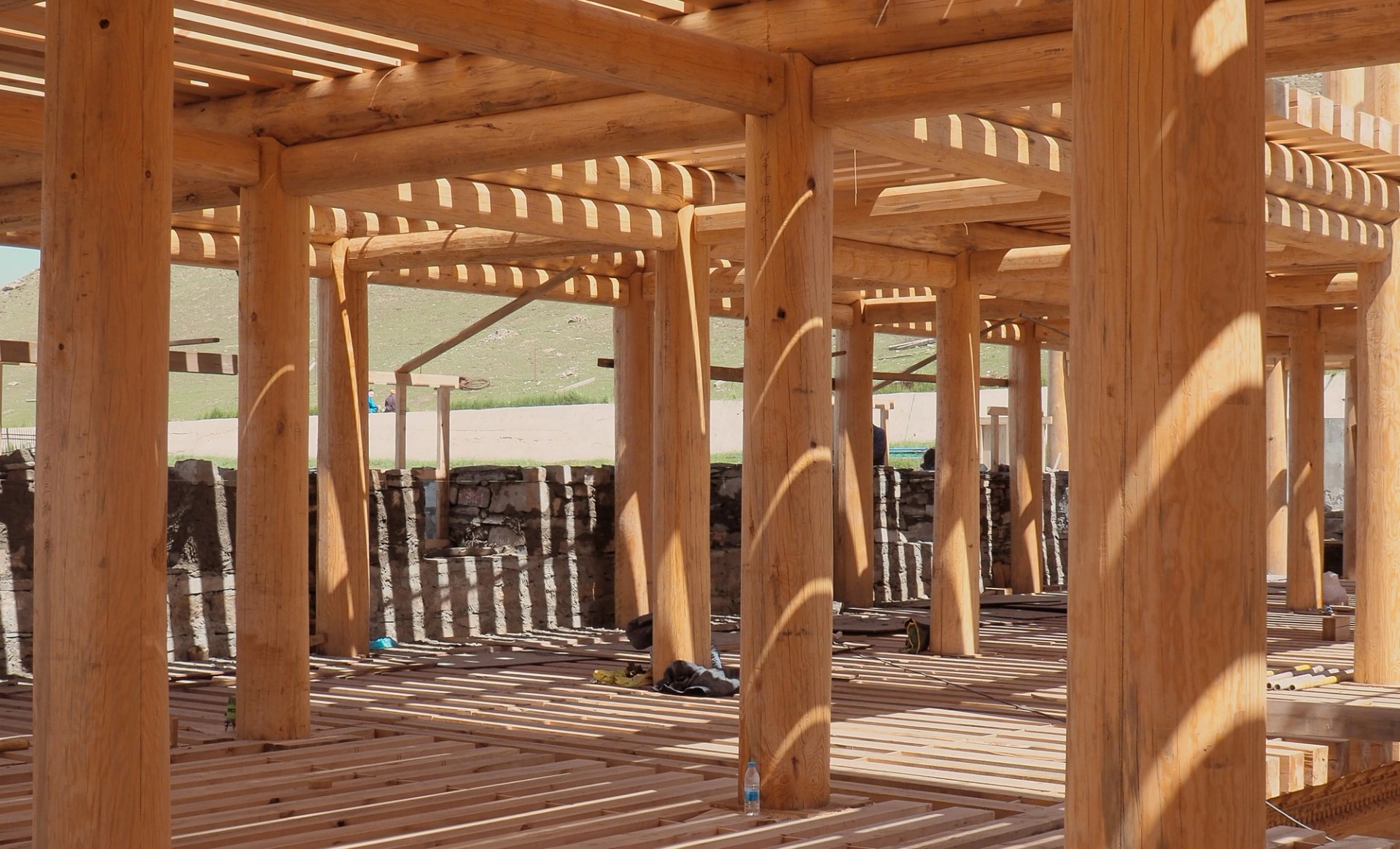
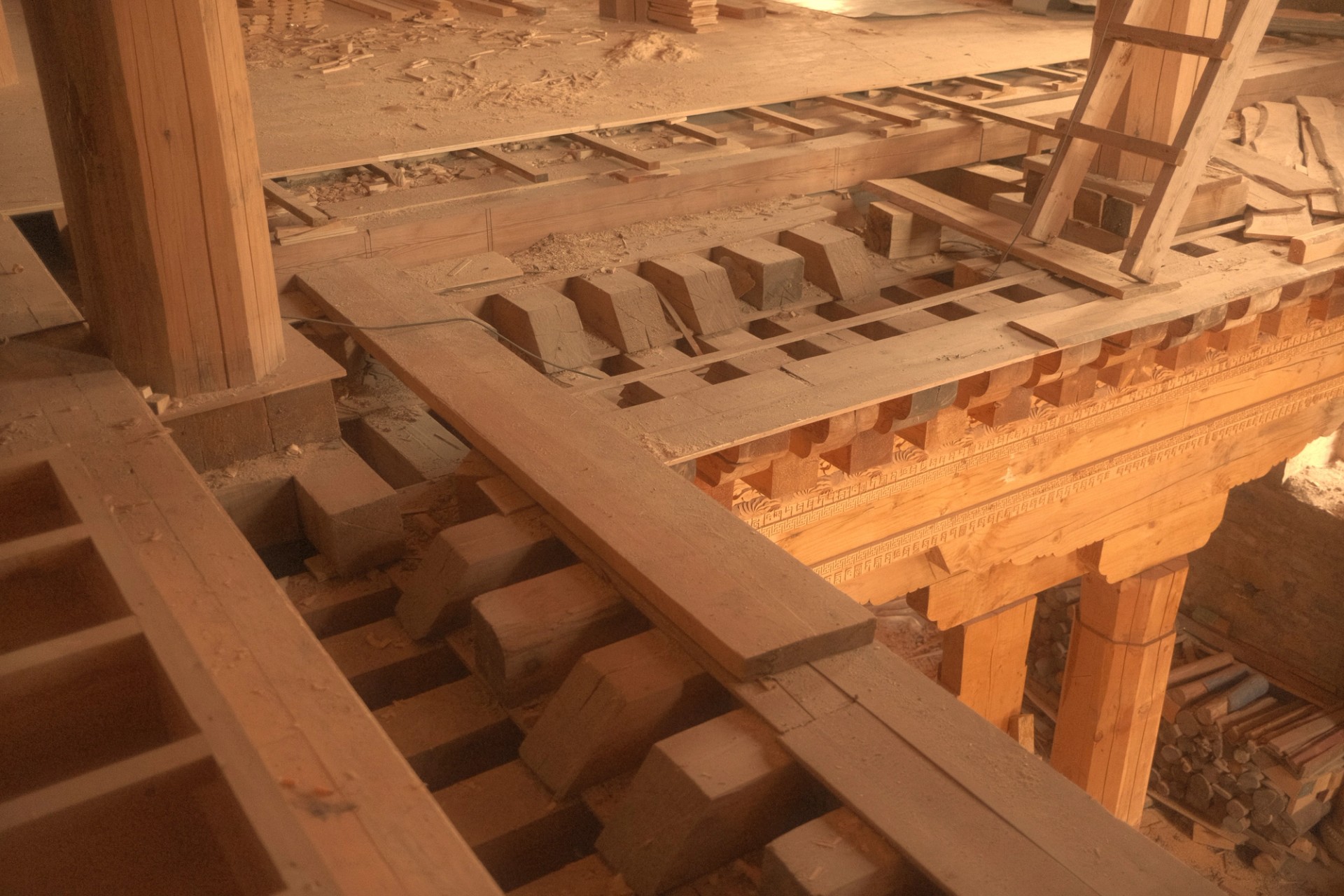
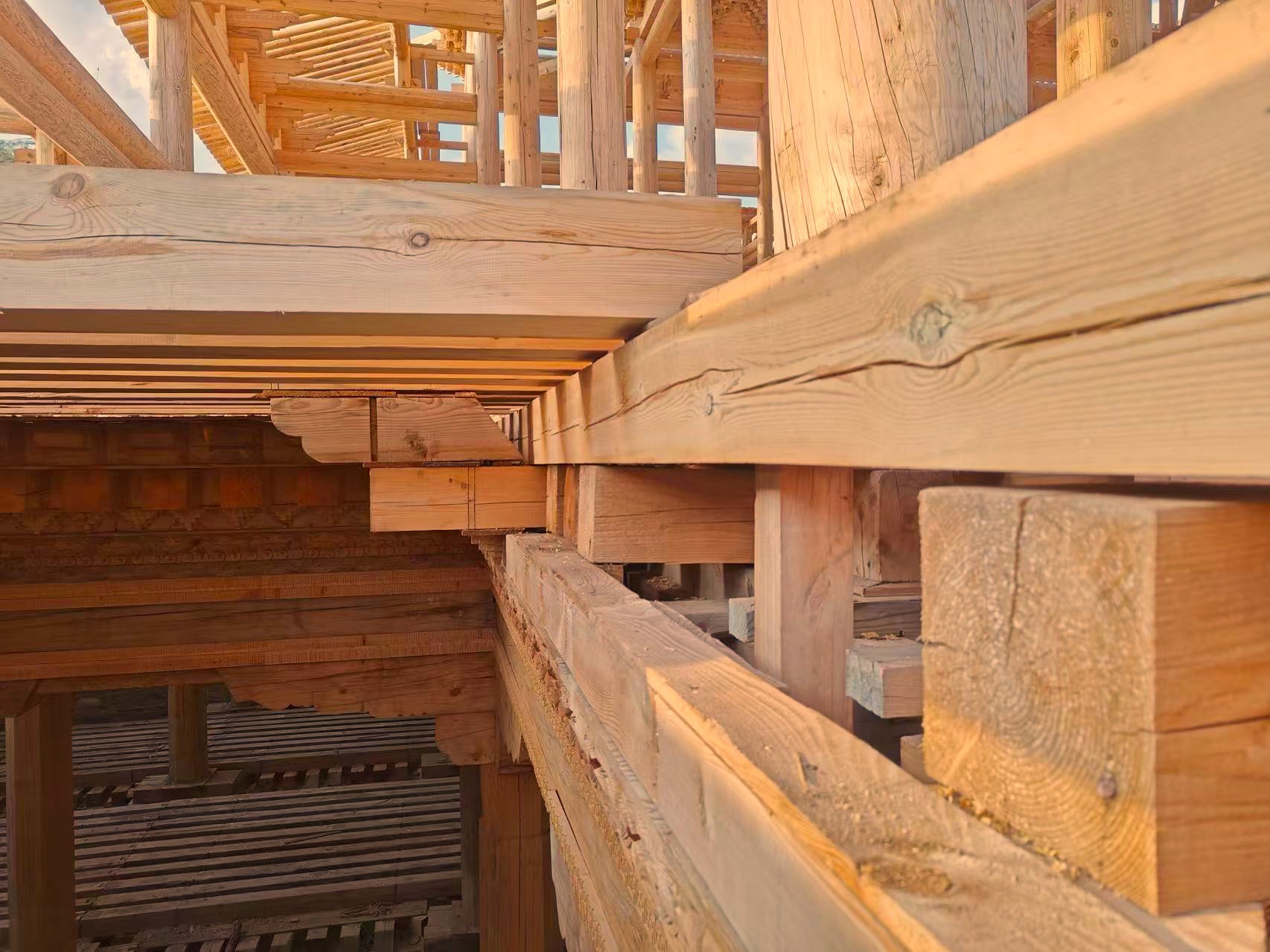
Square timber pads are installed at the bottom of the upper wooden columns, located at the cross intersection nodes of the primary and secondary beams in the lower layer. The vertical loads are evenly spread via pads and fully transferred to lower columns and bases through the cross-beam frame.
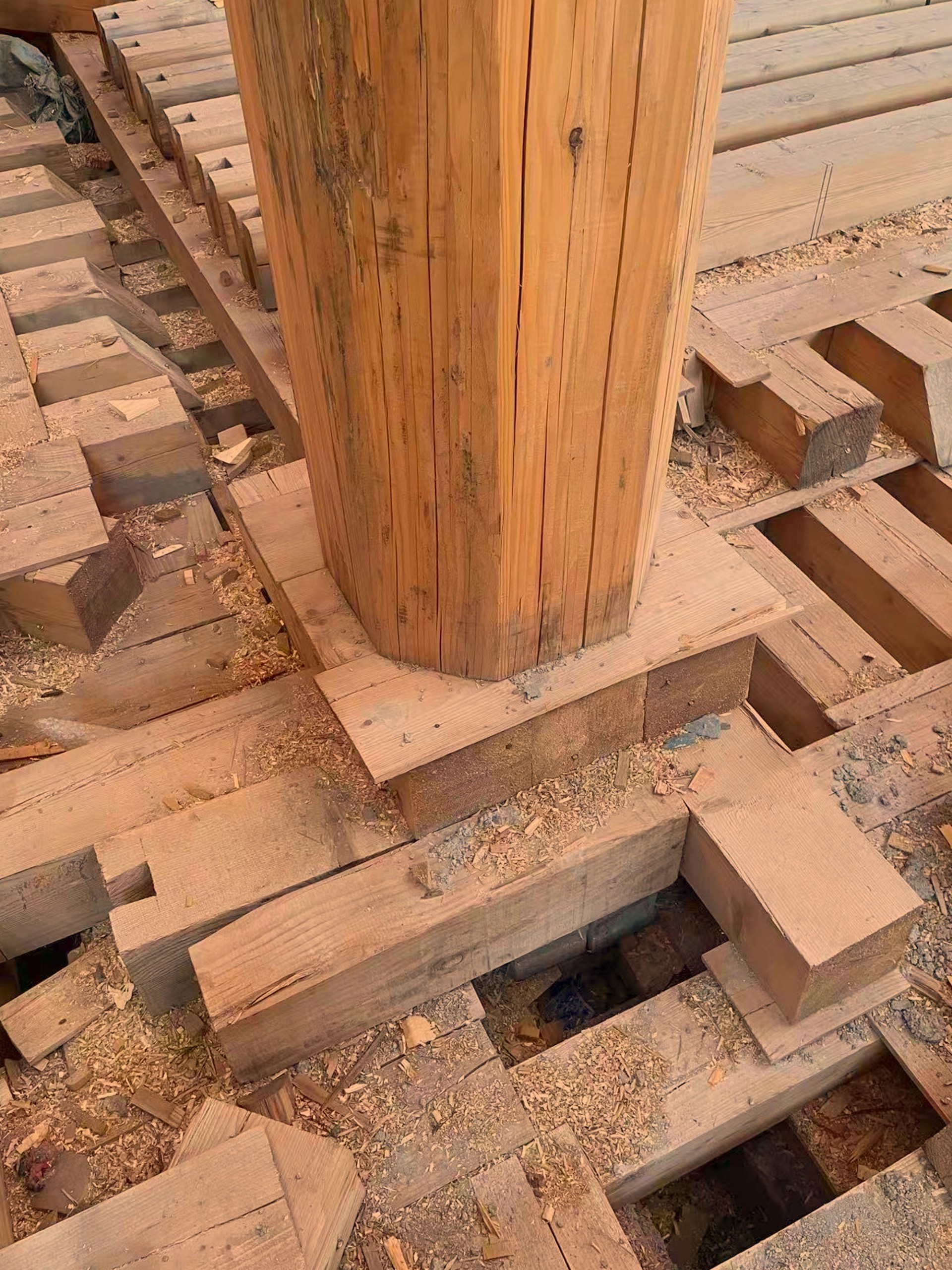
The column base and column foundation can be anchored with concealed pins, and the burial depth of the column foundation should not be less than 200mm to ensure overall stability.
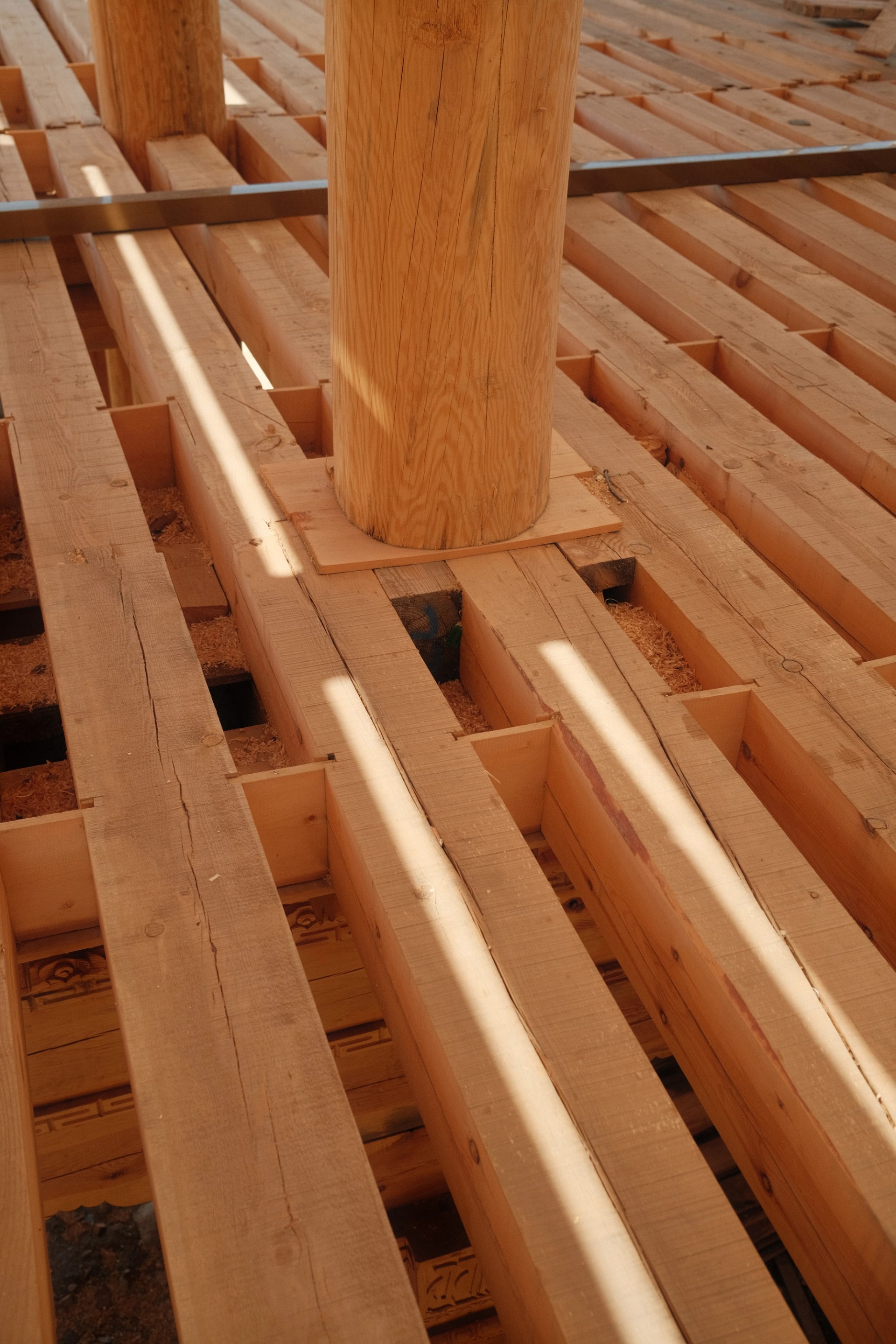
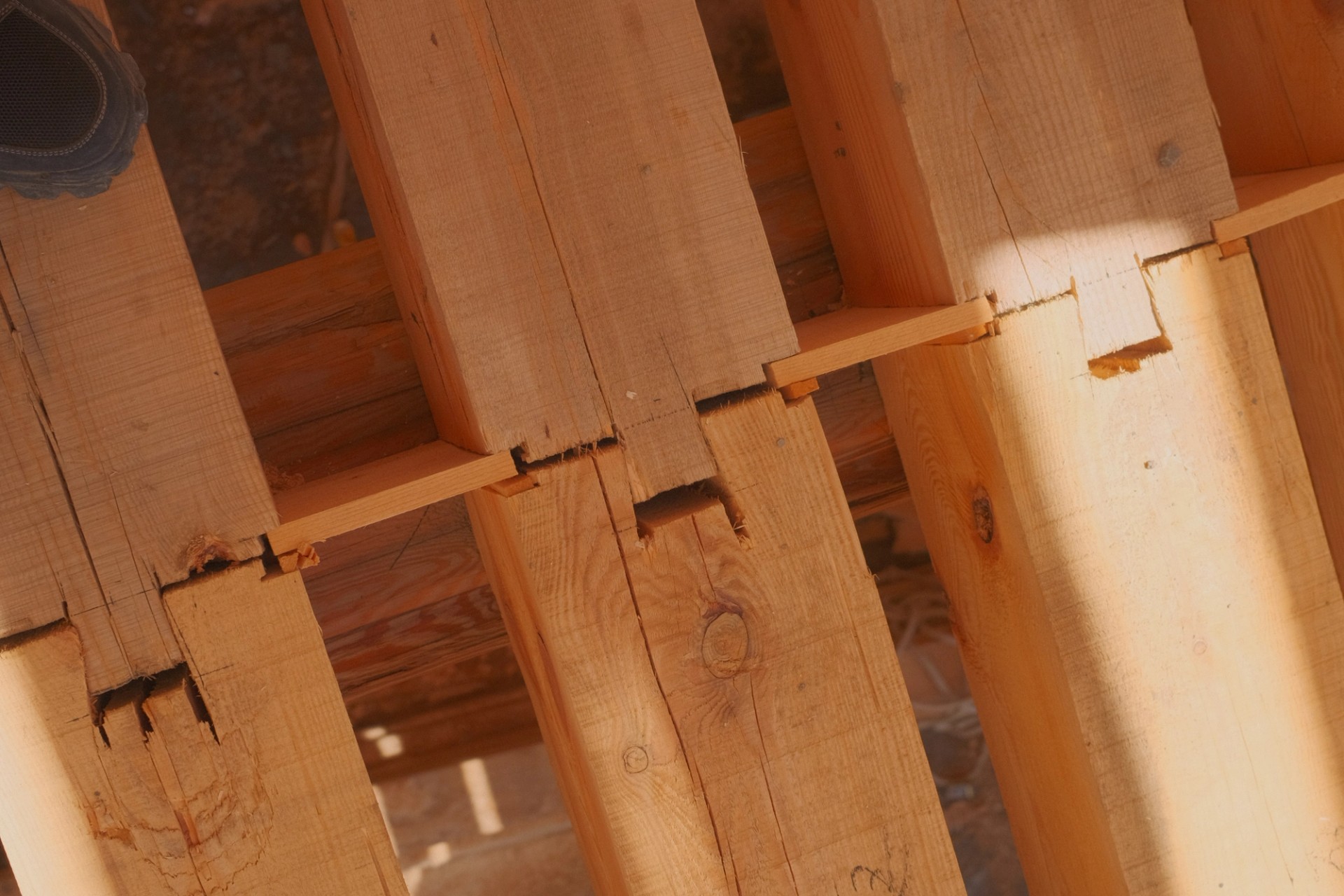
On the beam frame, rafters are vertically and densely laid as the base layer of the floor. The rafters are arranged in a straight or staggered layout. Rafter ends at beam joints have vertical or diagonal slots for wooden wedges to seal gaps and restrain displacement.
The entire structure follows the principle of axial force on wooden columns, with beam-column alignment and vertical load transfer, achieving the integration of load-bearing function and component decoration.